Hiring a full-time software engineer is a significant commitment. But many small and medium-sized businesses have important technical work that does not require forty hours of engineering every week. In those cases, an experienced part-time consultant can be a better fit—provided the work is clearly prioritized and the engagement is structured for success.
When part-time engineering makes sense
Consider a part-time engineer when you have a defined backlog of improvements, an integration between existing systems, an application that needs regular maintenance, or technical decisions that would benefit from experienced guidance. You may need someone to build a customer portal, troubleshoot an unreliable API, improve an Angular application, or keep a mobile app current with platform changes—without needing a permanent hire.
Five signs the model could work for you
- Your workload is real but uneven. You have meaningful development needs, but not a continuous full-time backlog.
- You need a specialist. A Java/Spring integration, Angular feature, mobile enhancement, or cloud architecture review calls for specific experience.
- You can define priorities. A business owner or team lead can decide which outcomes matter most and provide timely feedback.
- Your systems already exist. Incremental improvements and maintenance can often be delivered in small, reviewable batches.
- You want a direct working relationship. You prefer collaborating with the engineer doing the work rather than managing a large vendor team.
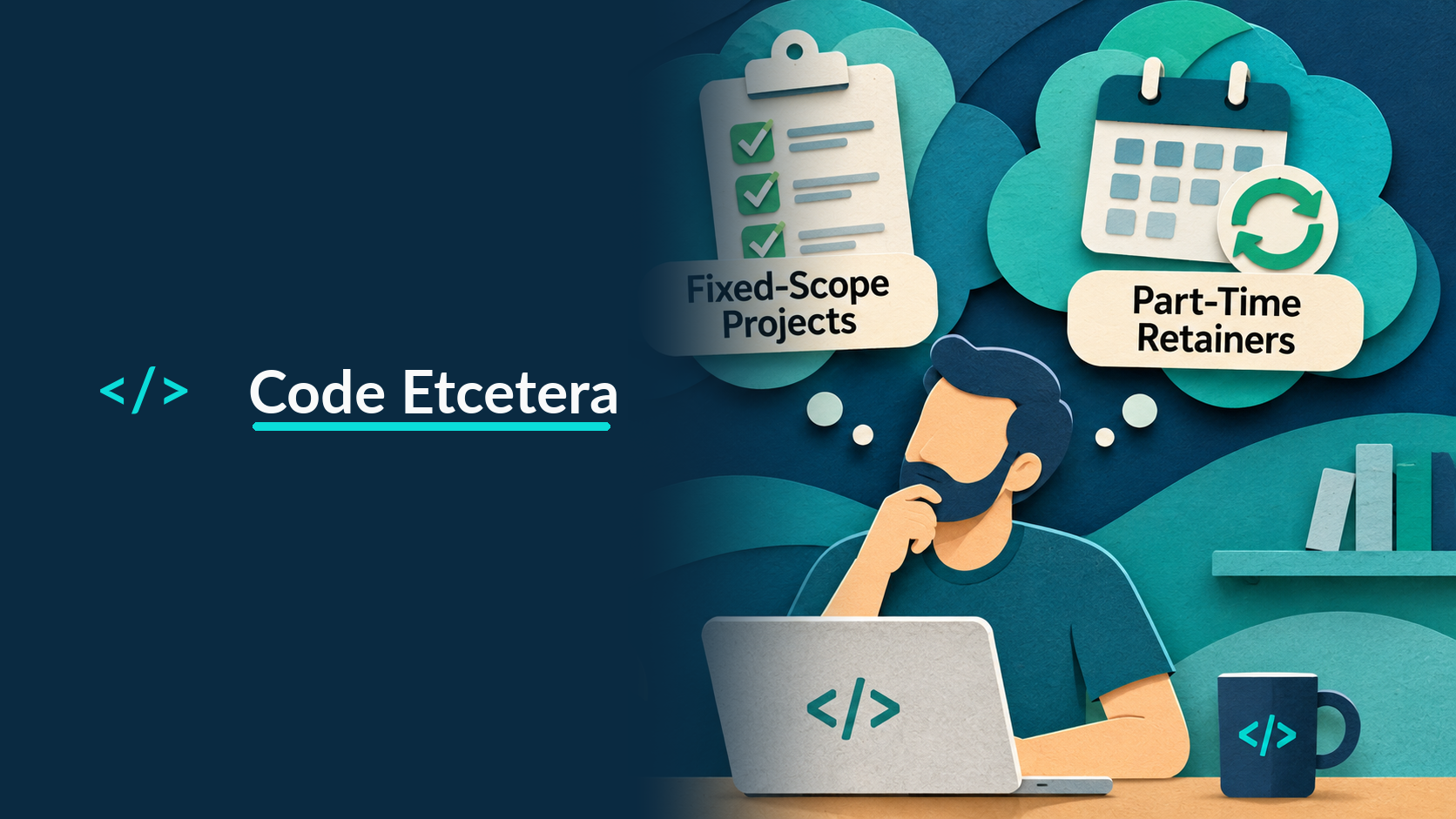
Fixed-scope project or ongoing retainer?
A fixed-scope project is a good starting point when you can describe the desired result: connect two applications, build a reporting tool, improve a workflow, or assess a codebase. Agree on deliverables, assumptions, acceptance criteria, and how changes to scope will be handled.
An ongoing part-time retainer makes more sense when you have a recurring stream of smaller needs: bug fixes, security and dependency updates, feature enhancements, technical planning, and periodic architecture guidance. Set an expected capacity, response-time expectations, and a regular prioritization rhythm.
These approaches can complement each other. A narrowly scoped initial project provides an opportunity to learn the systems and working style before deciding whether recurring support is worthwhile.
What to establish before work begins
- Ownership: Who sets priorities, approves changes, and accepts completed work?
- Access: Which repositories, environments, documentation, and test accounts are needed? Use least-privilege access and avoid sharing credentials in messages.
- Delivery: How will work be reviewed, tested, deployed, and documented?
- Availability: What working hours, meeting cadence, and turnaround expectations are realistic?
- Continuity: Who handles urgent production incidents, and what happens when the consultant is unavailable?
When you probably need a full-time hire instead
Part-time consulting is not a substitute for an embedded engineering owner when you need continuous daily collaboration, rapid response to production emergencies, or several parallel workstreams that require dedicated capacity. In those situations, a full-time engineer or a larger delivery team may be the better investment.
A practical first step
Write down the business problem, the systems involved, the outcome you want, and any timing constraints. A short discovery conversation can then determine whether the work fits a fixed-scope project, a part-time support arrangement, or something larger.
Need experienced engineering help without a full-time commitment? Contact Code Etcetera to discuss a focused software project or ongoing part-time consulting support.