

A practical guide to previewing automated workflow changes, separating test data from production, and defining evidence before a live rollout.

A practical guide to choosing, testing, and reviewing database indexes when a custom business application starts feeling slow.

Better business forms collect the information someone needs to make a next decision, without turning routine intake into a data-entry obstacle course.

A practical guide to choosing reliability measures for internal applications, setting realistic targets, and turning monitoring into useful decisions.
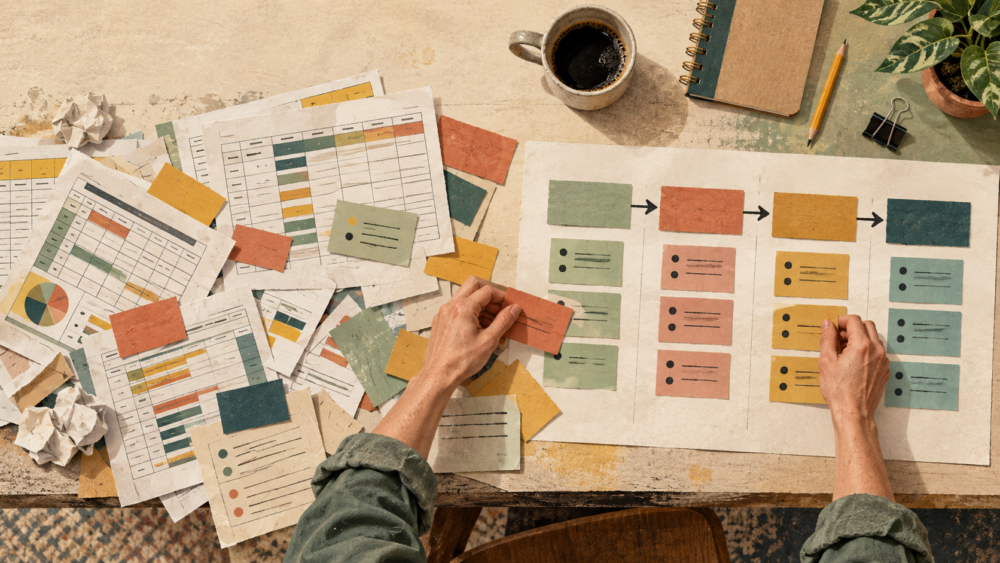
A practical framework for deciding when a spreadsheet is still useful, when it is creating operational risk, and what to build first in a custom internal tool.

A practical maintenance model for keeping a custom business application reliable, understandable, and ready to recover after launch.

A practical guide to choosing, storing, and mapping stable identifiers so connected business systems can exchange records without guesswork.

Before automating a repetitive process, map the normal path and the exceptions that make work difficult. This practical guide shows what to document, what to keep human, and how to choose a safer first automation.

A practical way to reduce delivery risk is to build one small, complete user journey before expanding a custom application.

A practical guide to documenting the repeatable checks, decisions, and recovery steps that help small teams support critical software with less guesswork.