

A practical framework for deciding what integration data to keep, how long to keep it, and how to remove it safely.

A practical framework for deciding when an integration should wait for an immediate response and when it should hand work off for later processing.

A useful automation audit trail helps a small team understand what happened, why it happened, and what needs attention without recording sensitive data unnecessarily.

A practical guide to introducing AI assistants into small-business workflows with clear boundaries, human approval, limited permissions, and measurable review steps.

A practical guide to moving slow business work out of the request path while keeping status, retries, and failures visible to people.
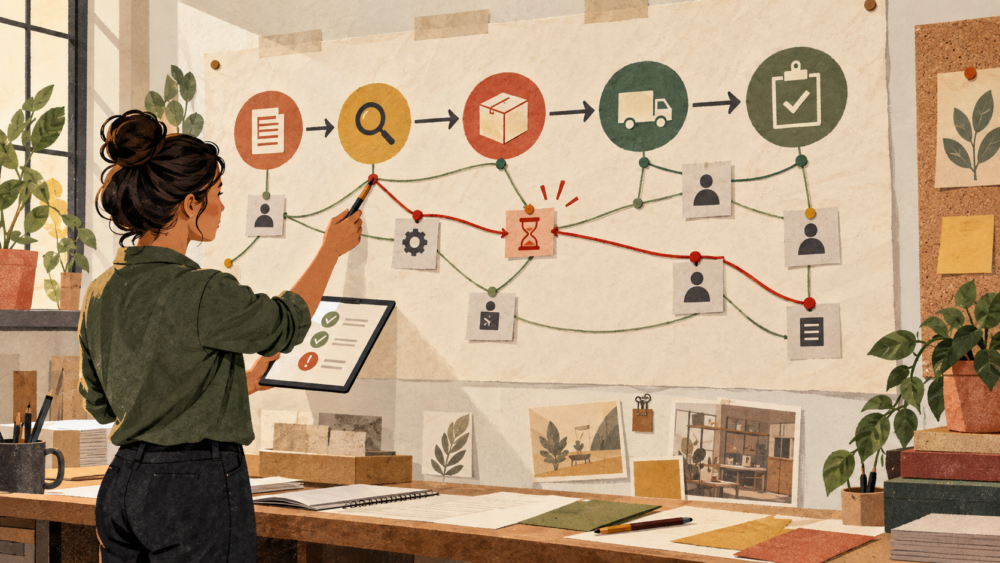
A practical guide to measuring automated workflows so teams can find failures, explain outcomes, and improve the right step before adding more complexity.

A practical guide to using idempotency keys, stable request identities, and reconciliation checks to make business integrations safer when networks fail.

Learn where to pause an automated workflow, what reviewers need to see, and how to make exceptions useful instead of disruptive.

A practical guide to using queues to absorb bursts, isolate failures, and give people a clear path for reviewing exceptions.

Five practical signals that a shared spreadsheet has become a workflow problem—and how to scope a small internal app without overbuilding.