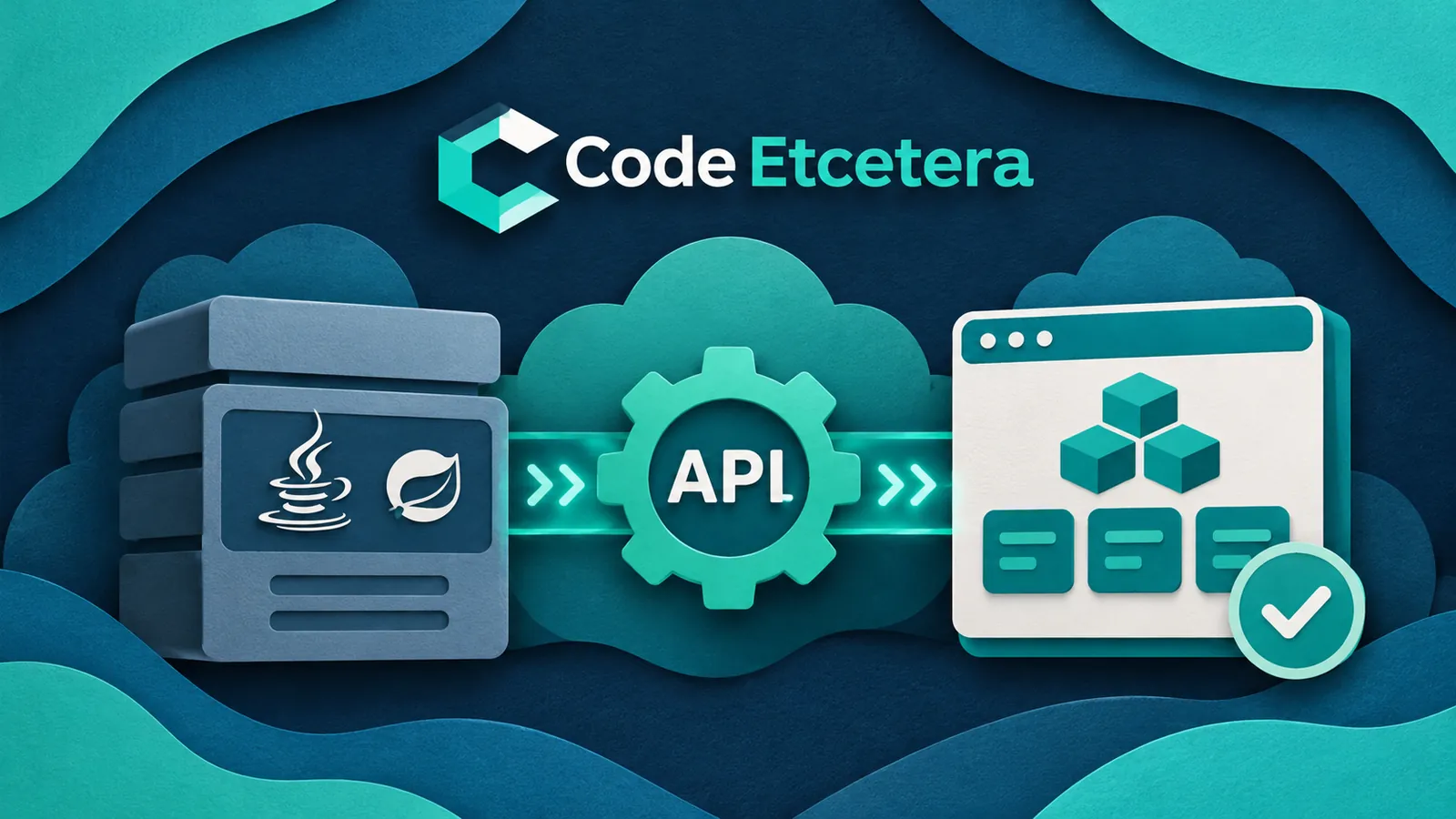
An aging Java application does not automatically need a rewrite. For many small and midsize businesses, the smarter investment is a carefully scoped improvement to the part of the system that causes the most friction: an unreliable integration, a slow workflow, or an API that is difficult to change safely.
Start with the business problem, not the framework version
Before upgrading libraries or introducing new architecture, identify one measurable pain point. Perhaps orders require manual re-entry, customers wait for a slow lookup, or every integration change risks breaking an unrelated feature. Document the current workflow, its owner, the systems involved, and what a successful improvement would look like.
Useful measures include error rates, processing time, support tickets, and the number of manual corrections per week. Establish a baseline so the project can demonstrate a result rather than simply delivering new code.
Choose a narrow API boundary
A focused Spring Boot engagement might add a versioned endpoint for order status, extract an integration behind a well-defined service interface, or replace a brittle batch handoff with an authenticated API. The first release should be small enough to test independently and roll back if needed.
Keep the existing application working while introducing the new boundary. Avoid migrating the entire database, replacing every controller, or splitting the system into microservices merely because those changes sound modern.
Five checks before writing production code
- Contract: Define request and response fields, validation rules, status codes, and how clients handle errors.
- Compatibility: Identify existing callers and decide whether an additive change or explicit API version is needed.
- Security: Use appropriately scoped authentication and authorization; do not embed credentials in application code or logs.
- Reliability: Decide how retries, timeouts, and duplicate requests behave, especially for operations that change data.
- Observability: Add useful structured logs, request correlation, and a small set of metrics without exposing sensitive data.
Build confidence with tests and a reversible rollout
Use unit tests for business rules and integration tests for database or HTTP behavior. Where practical, test the API contract against representative client requests. A staging environment with realistic but sanitized test data can catch configuration problems before deployment.
Release behind a feature flag or route a limited set of callers to the new implementation. Monitor failures and latency against the baseline. Prepare a documented rollback path before switching critical traffic. For a business workflow, include an acceptance test performed by the people who use it—not just developers.
What a fixed-scope modernization project can include
A practical engagement can be organized into four deliverables: (1) a short discovery and dependency review, (2) a written API contract and acceptance criteria, (3) implementation with targeted automated tests, and (4) deployment, rollback documentation, and a handoff session. Scope exclusions should be explicit—for example, no full UI redesign, database replatforming, or round-the-clock operational coverage.
For systems that need occasional improvements after launch, a part-time consulting retainer can cover planned maintenance, small enhancements, and periodic architecture reviews without requiring a full-time engineering hire. Define response expectations and monthly capacity up front.
How to know the project worked
Compare the agreed measures after release: fewer manual steps, lower failure rates, faster processing, or a safer deployment process. Keep a short backlog of next improvements, but treat each as a separate decision. Modernization is most valuable when it produces steady business gains without introducing unnecessary complexity.
For related planning, see our Angular application modernization guide and build, buy, or connect decision guide.
Plan a focused improvement with Code Etcetera
If your Java/Spring application supports an important workflow but has become difficult to extend, contact Code Etcetera. We can help define a manageable API modernization project or a part-time consulting arrangement centered on specific outcomes—not an open-ended rewrite.